
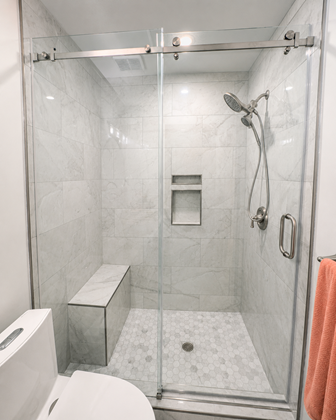
Glass Pro Install helps Calgary homeowners get shower glass thickness right the first time, because the wrong panel weight causes doors that sag, flex, and leak. Thickness is one of the most overlooked choices in a bathroom project. It shapes how your door hangs, how solid it feels, and how long the hardware lasts. This guide breaks down the common options, where each one fits, and how wall support ties into the decision. Read it before you lock in a glass order for your renovation.
Why Shower Glass Thickness Matters
A shower panel is heavy, and gravity never takes a day off. Glass that is too thin for its span will flex over time. That flex stresses hinges, opens gaps at the seals, and lets water escape onto your floor.
Correct shower glass thickness keeps the panel rigid. A rigid door hangs straight, closes cleanly, and holds its seal for years. It also feels reassuringly solid in daily use, which is what most owners want from a custom enclosure.
Thickness is not only about strength. It changes the whole character of the shower:
- Heavier glass looks and feels premium
- Rigid panels need less bracing hardware
- A true-hanging door seals better against leaks
- Thicker edges resist chips and nicks
Getting this right at the planning stage saves callbacks later. It is far easier to choose well now than to re-hang a flexing door after the fact.
Signs Your Current Glass Is Too Thin
An undersized panel gives itself away over time. A door that no longer closes flush is often flexing under its own weight. Seals that fail quickly can point to the same problem.
Watch for these clues in an older enclosure:
- A door that drifts open or will not latch cleanly
- Visible bowing when the panel is viewed edge-on
- Seals and sweeps that wear out faster than expected
- Hinges that loosen or need frequent tightening
None of these mean you did anything wrong. They usually mean the original glass was sized for looks, not for the span. A correctly weighted replacement solves the issue for good.
Common Thickness Options Explained
Most residential projects land in a narrow range of options. Each has a clear best use. The table below shows where each thickness fits.
| Glass thickness | Best use | What to expect |
|---|---|---|
| 3/16 inch | Framed enclosures, screens | Needs a frame for rigidity |
| 1/4 inch | Light sliding doors | Stable within a track system |
| 3/8 inch | Frameless doors and panels | Solid, true-hanging, popular choice |
| 1/2 inch | Large frameless spans | Maximum rigidity for wide openings |
Framed systems can use thinner glass because the frame carries the load. Frameless designs rely on the glass itself, so they need more thickness to stay stable. We match the panel to your layout rather than guessing.
You can read more in our post on why glass thickness affects durability. It covers the long-term payoff of choosing correctly.
Thickness and Wall Reinforcement
Heavier glass asks more of your walls. Hinges anchor into the wall behind the tile, so that backing must be solid. Weak blocking leads to loosening hinges and cracked tile.
We inspect wall structure before recommending a thickness. If the backing is light, we flag the fix before fabrication. This step is invisible in the finished shower, yet it protects the whole install. It is one reason custom work outlasts a stock kit.
All panels we supply are tempered safety glass. Tempering is tested to recognized glazing standards, which you can review through the National Research Council of Canada. Thickness and tempering work together: one gives rigidity, the other gives safety.
Matching Shower Glass Thickness to Your Design
The style of enclosure guides the thickness you need. A compact framed screen and a wide frameless wall have very different demands. We help you weigh the trade-offs for your space.
- Small frameless doors suit 3/8 inch glass
- Wide or tall panels favour 1/2 inch for stability
- Sliding systems work well with lighter glass in a track
- Fixed panels beside a door match the door thickness
If you are comparing door styles, explore our frameless shower door options. For a single tailored panel, see our custom single door builds. Both pages show how the right shower glass thickness shapes the finished look.
How We Size and Fabricate Your Panels
Accurate sizing is where a lasting shower begins. We template your opening rather than relying on rough dimensions. That template captures every out-of-square wall and uneven floor.
From there, the glass is cut, polished, and tempered to your exact measurements. Tempering happens after cutting, since the glass cannot be trimmed once treated. This is why precise templating matters so much.
Edges are polished smooth for both safety and looks. Holes for hinges and handles are drilled before tempering. The finished panel arrives ready to hang with no field adjustments.
This process is the difference between a snug custom fit and a leaky stock kit. It takes a little longer, and it pays off for years of trouble-free use.
Pairing Thickness With the Right Hardware
Glass and hardware have to match. A heavy panel needs hinges rated for its weight, or the door will sag over time. Light hardware on thick glass is a common cause of early wear.
We size hinges, clips, and sweeps to the panel you choose. Heavier doors use sturdier hinges with a solid core. Sliding systems use rollers matched to the glass in the track.
- Thick frameless doors pair with heavy-duty hinges
- Sliding panels use smooth, weight-rated rollers
- Fixed panels use clips sized to the glass
- Seals are matched to the gap each panel leaves
Getting this pairing right keeps the door true and the seal tight for the long run.
Frequently Asked Questions
What shower glass thickness is best for a frameless door?
Frameless doors usually use 3/8 inch or 1/2 inch tempered glass. The extra weight keeps the panel rigid so it hangs straight and swings true. Thinner glass needs a frame to stay stable.
Is thicker glass always safer?
Thicker glass resists flex and feels more solid, but safety comes mainly from tempering. All our panels are tempered regardless of thickness. The right thickness is about rigidity and fit, not just safety.
Can my walls support heavier glass?
Most walls can once properly reinforced. Heavy panels need solid backing behind the tile so hinges stay anchored. We check your wall structure before recommending a thickness.
Is thicker glass harder to maintain?
No. Upkeep is the same across thicknesses: a quick squeegee and gentle cleaning. Thicker panels often hold coatings well and resist the small chips that thin edges can suffer.
Talk to Glass Pro Install
Not sure which panel weight fits your bathroom? Our team can measure your opening and recommend the right shower glass thickness for your design. Call us at +1 403-899-8272.
Visit our shop at 6115 4 St SE #8, Calgary, AB T2H 2H9. We are open Monday to Friday, 8am to 6pm and happy to walk you through the options.