
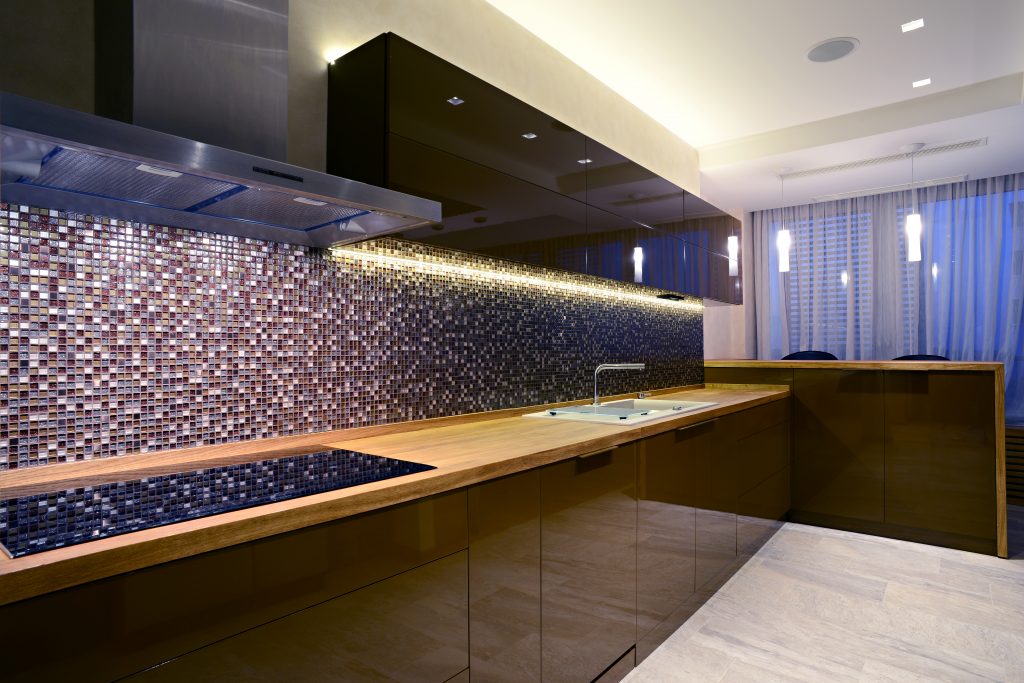
Kitchen glass lighting can make the same panel look warm, cool, darker, or even slightly different in color. Therefore, if your glass looks perfect in the showroom but “off” at home, the lighting is usually the reason, not the glass.
At Glass Pro Install, we see this all the time during final walkthroughs. In other words, your eyes are reacting to how light hits the surface, how it bounces off nearby finishes, and how shadows fall across the room. Once you know what to look for, you can plan glass choices that stay consistent in real kitchen conditions.
Kitchen glass lighting basics you notice right away
Glass is basically a mirror that also lets light pass through, and the balance changes with your fixtures. Consequently, a glossy surface can show bright hot spots, while a matte or painted finish can look smoother and more even. If you have multiple light sources, your glass can appear to shift as you move around the room.
Color temperature matters just as much as brightness. For example, warm LEDs (often around 2700K–3000K) can make clear or low iron glass feel softer, while cooler LEDs (around 4000K+) can make the same glass feel sharper and more modern. Meanwhile, daylight from a window can overpower everything at certain times of day, which is why a backsplash can look different at 9 a.m. than it does at dinner.
The three lighting types that change the look the most
Under cabinet lighting and the “glow line” effect
Under cabinet strips are close to the glass, so they exaggerate texture, edges, and reflection lines. Therefore, you might notice a bright band across the backsplash or a stronger highlight near the bottom of upper cabinets. If the light is uneven or the diodes are visible, it can create a dotted reflection that some homeowners find distracting.
Diffusers and placement help a lot. To clarify, a frosted diffuser softens the reflection, and a slightly recessed channel reduces glare on the glass face. This is one reason many people choose a finish that’s designed to look clean under task lighting, such as a painted glass backsplash.
Ceiling fixtures and shadows on large glass areas
Overhead lights create top down shadows that can make glass look darker in corners and brighter in the center. Consequently, a big smooth surface may look like it has “bands” even when it is perfectly flat. The effect is stronger when the fixture is a single point source, like a pendant, compared with a wider diffuser.
This matters in kitchens that connect to open living areas. For instance, glass near the perimeter can reflect bright ceiling cans, while glass near the center reflects pendant bulbs, and the two reflections can look like different colors. A plan that considers both ceiling and cabinet lighting keeps the whole kitchen feeling consistent.
Natural daylight and the time of day shift
Daylight changes color all day, and it changes direction as the sun moves. Therefore, glass that looks neutral in the evening can look slightly blue or slightly yellow in the afternoon, depending on your windows. If your kitchen faces west, the late day sun can create intense reflections that make glass appear brighter than expected.
The practical move is to evaluate your space in real conditions. That is to say, look at samples near the actual install location during morning, afternoon, and night lighting. When the lighting is stable, your decision becomes much easier.
How nearby finishes change what you see in glass
Glass does not exist alone, because it reflects whatever is around it. Consequently, warm wood cabinets can “warm up” reflections, while stainless appliances can add cooler highlights. Even your paint color matters, especially if you have light colored walls that bounce light back onto the glass.
Countertops also influence the look. For example, a high contrast stone pattern can create busy reflections on glossy glass, while a quieter countertop makes the glass read as cleaner and more solid. If you want a calmer look, choosing the right finish can be more effective than changing the glass color.
Choosing glass with lighting in mind
If you want the most predictable look, aim for a surface that handles reflections in a controlled way. Therefore, painted or back coated glass can keep color consistent because you are seeing a solid backing rather than whatever is behind the glass. Clear glass can look amazing too, but it is more sensitive to what it reflects.
Edges and hardware matter when lighting is strong. For instance, polished edges can catch light and create a bright outline, while different hardware finishes can either blend in or stand out depending on bulb color. If your kitchen has strong task lighting, thinking through these details prevents surprises later.
Glass choices can also connect across the home. Similarly, if you are installing shower doors Calgary and you like the way a certain finish looks under bathroom lighting, you can use that same idea in the kitchen for a consistent style.
When lighting is also a safety and durability factor
In some projects, lighting is not just about looks, because it affects visibility and maintenance. Consequently, brighter lighting can make fingerprints and smudges more noticeable on glossy glass, which can change how often you feel like cleaning. A finish that looks “too shiny” under strong LEDs may feel perfect under softer, diffused lighting.
For commercial kitchens or storefront adjacent spaces, the lighting impact can be even bigger. For example, exterior daylight plus strong interior LEDs can make glass read differently from inside and outside, so planning the overall lighting helps the glass perform visually. If your project involves a larger building envelope, commercial glass exterior work and lighting planning should be considered together.
When damage happens, lighting can hide or reveal it. Therefore, small chips, scratches, or seal issues are often easier to spot under angled task lighting than under flat overhead light. If you suspect a problem, commercial glass repair support can help confirm what is real damage versus a reflection trick.
If you want a simple starting point for any glass project, begin with a plan and then match the glass to your lighting. In addition, you can review options and project examples with Glass Pro Install at Glass Pro Install.
FAQs
Why does my glass backsplash look darker at night?
At night, warmer indoor bulbs and fewer reflections from daylight can make glass look deeper. Consequently, the same glass can appear darker or richer because the room has less balanced light.
Will switching to cooler LEDs make my glass look whiter?
Often yes, but it depends on what the glass reflects. Therefore, cooler LEDs can reduce warm tones, but nearby wood, paint, and countertops can still add warmth through reflections.
Do glossy finishes always show more glare?
Usually they do, because they reflect light more directly. However, diffused fixtures and well placed under cabinet lighting can reduce harsh glare and keep the look comfortable.
Is painted glass more consistent than clear glass in kitchens?
In many kitchens, yes. That is to say, a solid backing reduces the impact of wall color, shadows, and what sits behind the glass, so the color reads more evenly.
What should I check before finalizing a glass choice?
Check samples under your real lighting during different times of day. Moreover, look at the glass from multiple angles near cabinets and counters, because that is where reflections and shadows show up most.